Recycling and Sustainability at Our Cleaning Company
 At our Cleaning Company we place sustainability at the heart of every service. We are a sustainable cleaning company committed to practical, measurable action: from on-site waste separation to route optimisation for our fleet. Our policies reflect local boroughs' approach to waste separation, so our teams follow kerbside-style sorting of paper, glass, metal, plastic and food waste where clients' councils support those streams. Every cleaner is trained to keep recyclables separate from general waste and to minimise single-use plastics.
We have set a clear recycling percentage target: 70% diversion from landfill by 2028. That target covers materials generated directly through our cleaning operations ??? packaging, disposable cloths, bottles, and redundant textiles ??? plus client-supported collections where we manage on-site waste handling. This goal is ambitious but realistic: it aligns with many boroughs' targets and the growing expectations for eco-friendly cleaning services.
![The image displays a neatly arranged collection of cleaning supplies, including three stacks of colourful sponges and scrubbers in shades of blue, green, yellow, and pink, positioned in the foreground. To the right, there is a handheld scrub brush with a curved orange handle and stiff white bristles, resting on top of folded cleaning cloths in pastel colours such as pink, yellow, and light blue. The cloths appear clean and soft, suitable for delicate surfaces. The background is plain white, emphasizing the vibrant colours and textures of the cleaning tools. These items are typical for residential and commercial cleaning tasks in the UK, including kitchens, bathrooms, and general areas, supporting sustainable cleaning practices promoted by companies like cleaningcompany.org.uk, based near [POSTCODE] in [TOWN]. The overall presentation suggests readiness for thorough cleaning routines, including surface scrubbing and wiping, aligning with professional standards of cleanliness and sustainability.](/pub/_photos/cleaning/f1490725832.jpg) Our approach to resource recovery includes practical separation at source. In areas where boroughs operate separate food waste collections we ensure that food-soiled items are disposed of in the correct stream. Where local recycling schemes accept specific plastics or mixed recycling bins we adapt our procedures accordingly. The cleaning teams know to separate cardboard, paper and dense plastics for transfer to municipal systems or partner recyclers.
Our approach to resource recovery includes practical separation at source. In areas where boroughs operate separate food waste collections we ensure that food-soiled items are disposed of in the correct stream. Where local recycling schemes accept specific plastics or mixed recycling bins we adapt our procedures accordingly. The cleaning teams know to separate cardboard, paper and dense plastics for transfer to municipal systems or partner recyclers.
We actively work with local transfer stations and municipal facilities to ensure collected materials are processed correctly. Typical facilities we use include borough transfer stations, municipal waste transfer centres and regional aggregation points for textiles and bulky items. These relationships allow us to move materials quickly from site to processing centres that specialise in paper, glass, metals, and textiles recovery ??? reducing contamination and improving final recycling rates.
Low???carbon vans and fleet initiatives
Our commercial cleaning company's logistics are being modernised to reduce emissions. We operate a mixed fleet that increasingly features electric and hybrid vans, telematics for route planning, and low-emission driver training. By combining efficient vehicle choice with optimised scheduling we lower fuel use and shorten the time materials spend on the road before reaching transfer stations. We monitor emissions with direct metrics and publish internal progress: average vehicle emissions per job, percentage of deliveries made by electric vehicles and reductions in fuel consumption month over month. These measures support our status as an environmentally responsible cleaning company and help clients choose eco-conscious partners.
Partnerships with charities are a key part of our recycling and reuse strategy. We coordinate donations of usable items such as clean linens, towels, unopened non-hazardous cleaning products and surplus textiles to local charities and community groups. These partnerships reduce waste and create social value: donated textiles and linens are either reused by community projects or directed to charities that refurbish and redistribute them.
Our green cleaning company programs also include material reuse initiatives: we prefer concentrated refill systems for cleaning liquids, refillable dispensers, and bulk purchasing to cut packaging. We train staff to separate recyclables from reusables and to store items destined for charity collection safely until pickup. This reduces contamination and ensures higher-quality donations.
To support transparent practice, we keep a simple tracker for rescued items and diverted waste streams. The tracker shows quantities of textiles donated, volumes of bottles recycled, and tonnes diverted to municipal and specialist processors. This evidence-based approach helps verify progress toward our recycling percentage target and highlights opportunities for further improvement.
 We also work with local authorities to stay aligned with borough recycling rules. Many boroughs operate a three- or four-stream system ??? dry mixed recycling, glass, food/organic waste and residual waste ??? and where these systems exist we adapt our processes so that all cleaning sites comply with the local regulations. This ensures that materials we collect feed into the correct municipal or contractual processing streams.
Our sustainability programmes include staff incentives and regular audits: teams earn recognition for high-diversion sites, and internal audits highlight contamination issues that we address with training and improved signage. Small operational changes ??? like clearer labeling of bins and a dedicated area for charity donations ??? make a measurable difference in diversion rates.
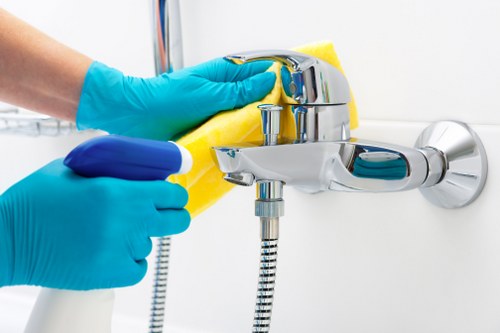 In summary, our eco???friendly cleaning services combine a measurable recycling percentage target, active use of local transfer stations, charity partnerships for reuse, and a transition to low???carbon vans. Together these initiatives create a practical, local and scalable sustainability model for a modern cleaning company: less waste, more reuse, and lower carbon impact across every contract.